


36W E27 Full Spectrum Grow Light Bulb for Indoor Plants
36W E27 Full Spectrum Grow Light Bulb for Indoor Plants
🌿 Full-spectrum LED (400–780nm)
🔌 Fits any E27 lamp — no fixture needed
♻️ Ceramic heat-sink, 30,000hr rated life
Couldn't load pickup availability
Products detalis
Products detalis
A Full-Spectrum Grow Light That Screws Into Any Lamp You Already Own
This LED grow light bulb uses a standard E27 screw fitting, so it drops straight into any desk lamp, floor lamp, or pendant fixture you already have — no separate grow-light rig needed. It mixes the full range of wavelengths plants use for photosynthesis into a single warm, even beam, with a 60° beam angle for good coverage over nearby pots.
- Full-spectrum output (400–780nm) from a single bulb
- Manufacturer-stated output for the 36W version: approx. 3600 lumens, PPF ~111.56 μmol/s, CRI 80+
- Manufacturer-stated output for the 24W version: approx. 1830 lumens, PPF ~66.87 μmol/s, CRI 90+
- Ceramic heat-sink design for efficient heat dissipation, manufacturer-rated for a 30,000-hour lifespan
- Suited to hydroponic setups, greenhouses, grow cabinets, and general indoor plant care
Safety note: do not look directly at the light source while it's switched on.
Full-spectrum output (400–780nm)
Full-spectrum output (400–780nm)
Covers the full range of wavelengths plants use for photosynthesis — a warm, even beam rather than the red/blue-only “blurple” look of older grow LEDs. 60° beam angle for coverage over nearby pots.
36W or 24W — which do I need?
36W or 24W — which do I need?
36W: ~3600 lumens, PPF ~111.56 µmol/s, CRI 80+ — more raw output for larger plants or wider spread.
24W: ~1830 lumens, PPF ~66.87 µmol/s, CRI 90+ — softer, more natural-looking light for smaller setups.
Does it fit my lamp?
Does it fit my lamp?
Standard E27 screw fitting — the same size used by most desk lamps, floor lamps and pendant fixtures. Check your fixture is rated to handle the bulb’s wattage before fitting.
Heat & lifespan
Heat & lifespan
Ceramic heat-sink design for efficient heat dissipation, manufacturer-rated for a 30,000-hour lifespan.
How many hours a day should I run it?
How many hours a day should I run it?
As general practice, most growers run supplemental full-spectrum lighting around 12–14 hours a day (longer for seedlings and succulents), with at least 8 hours of darkness. Adjust based on how your specific plants respond. As with any bright LED bulb, avoid looking directly at it while switched on.


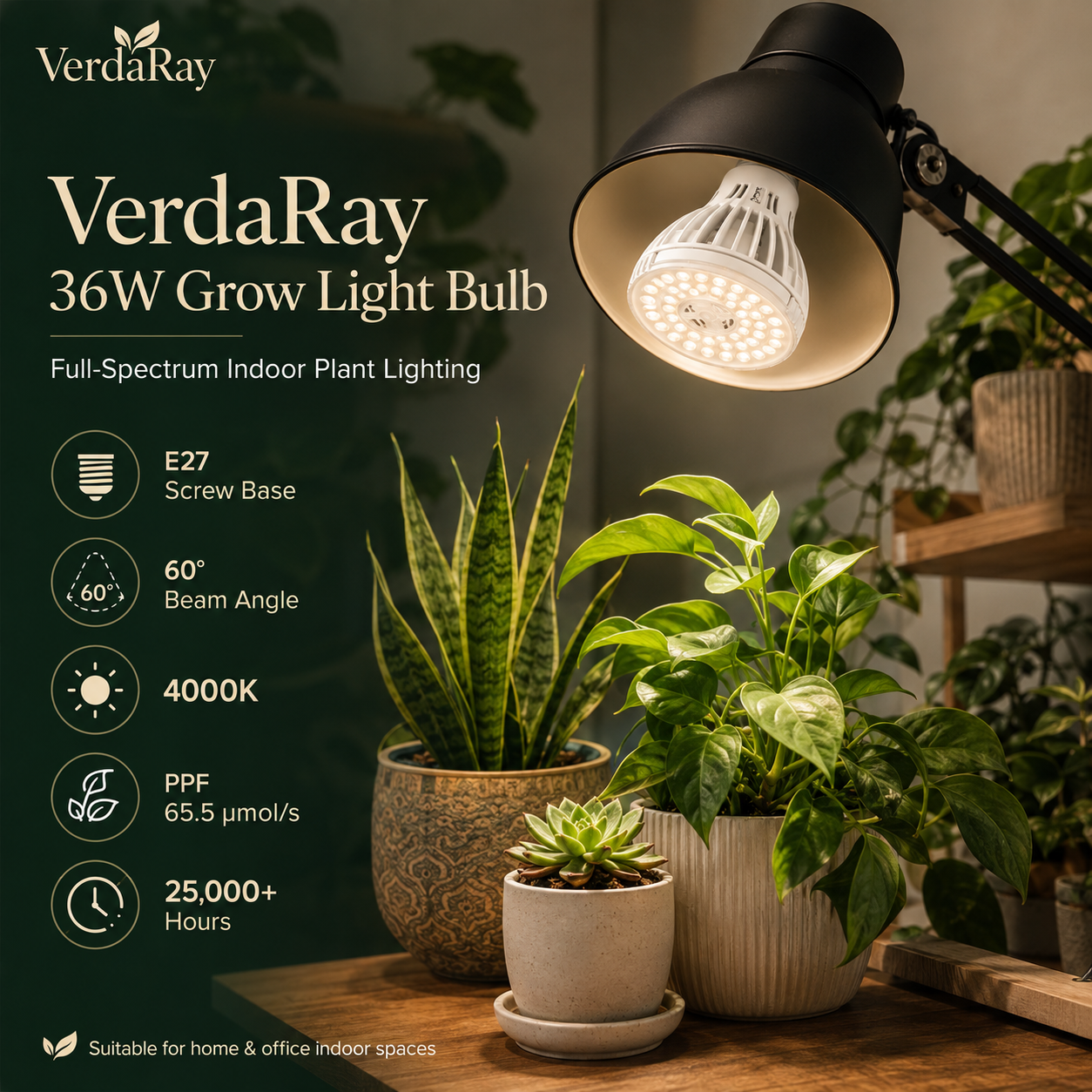
A full-spectrum E27 grow light bulb that fits any lamp you already own
No separate grow-light rig needed — just a standard E27 full-spectrum LED bulb (400–780nm), built for hydroponic setups, greenhouses, grow cabinets, and general indoor plant care.
This bulb vs. a regular household bulb
A regular household bulb lights a room for human eyes — it isn’t built to fuel photosynthesis. Here’s the practical difference.

|
REGULAR BULB | |
|---|---|---|
Full-spectrum light (400–780nm), built for photosynthesis |
||
Fits a standard E27 fitting — no separate fixture needed |
||
Ceramic heat-sink, 30,000-hour rated lifespan |
||
CRI 80+ (36W) / 90+ (24W) for accurate colour rendering |
||
PPF up to ~111.56 µmol/s (36W) — real photosynthetic light output |
||
60° beam angle for even coverage over nearby pots |
Real specs, not marketing numbers
Manufacturer-rated figures from the product datasheet.

From the datasheet
100%
Full-spectrum coverage across the 400–780nm range plants use for photosynthesis.
90%
Manufacturer-rated Colour Rendering Index (CRI) on the 24W version.
80%
Manufacturer-rated Colour Rendering Index (CRI) on the 36W version.
These are manufacturer-rated spec figures, not a customer survey — we don’t have review data yet since the store hasn’t launched.
What makes this bulb different
-

Full spectrum, not “blurple”
This bulb puts out a warm, white-ish full-spectrum beam (400–780nm) rather than the pink/purple cast of older red/blue-only grow LEDs.
-
No dedicated fixture required
Standard E27 screw fitting — drops into a desk lamp, floor lamp or pendant you already own instead of needing a separate grow-light rig.
-
Built to last
Ceramic heat-sink design and a manufacturer-rated 30,000-hour lifespan.

Common questions
Will this fit my existing lamp?
Yes — it uses a standard E27 screw fitting, the same size used by most desk lamps, floor lamps and pendant fixtures. Just check your fixture can handle the bulb’s wattage before fitting.
Can I just use a regular LED bulb instead?
In a pinch, a very bright daylight-rated LED (5000–6500K) can help low-light plants get by, but it won’t put out the same photosynthesis-relevant spectrum as a dedicated full-spectrum grow bulb like this one.
Why doesn’t it look purple or pink like some grow lights?
Because it’s full-spectrum (400–780nm) rather than the red/blue-only “blurple” LEDs used in older grow lights — it puts out a warm, even white-ish beam instead of a strong colour cast.
36W or 24W — which one should I choose?
The 36W version puts out more raw light (~3600 lumens, PPF ~111.56 µmol/s) — better for larger plants or wider coverage. The 24W version is dimmer (~1830 lumens, PPF ~66.87 µmol/s) but has a higher CRI (90+), giving a softer, more natural-looking light for smaller setups.
How many hours a day should I run it?
As general practice, most growers run supplemental full-spectrum lighting around 12–14 hours a day (a bit longer for seedlings and succulents), with at least 8 hours of darkness — adjust based on how your own plants respond.
How far should it be from my plant?
As a general starting point, growers typically position lights like this anywhere from a few inches to a few feet away depending on how much light the plant needs — closer for high-light plants, further back for low-light ones — then adjust based on how the leaves respond.
Does it get hot, and how long does it last?
It uses a ceramic heat-sink for efficient heat dissipation and is manufacturer-rated for a 30,000-hour lifespan. As with any bright LED bulb, avoid looking directly at it while switched on.